
Once you know your seasonal palette, the next step is learning how to mix and match colours confidently. Using your seasonal colours strategically can elevate your outfits, make dressing easier, and ensure your wardrobe always flatters your natural colouring.
At MyColourSeason, our email-based colour analysis gives you a personalised seasonal palette, which you can apply using the techniques below.
Why Mixing and Matching Colours Matters
Mixing and matching colours effectively:
Enhances your natural beauty
Creates harmonious, stylish outfits
Simplifies wardrobe decisions
Maximises the versatility of your seasonal palette
Using your seasonal colours correctly ensures that your clothing, accessories, and even scarves work together effortlessly.
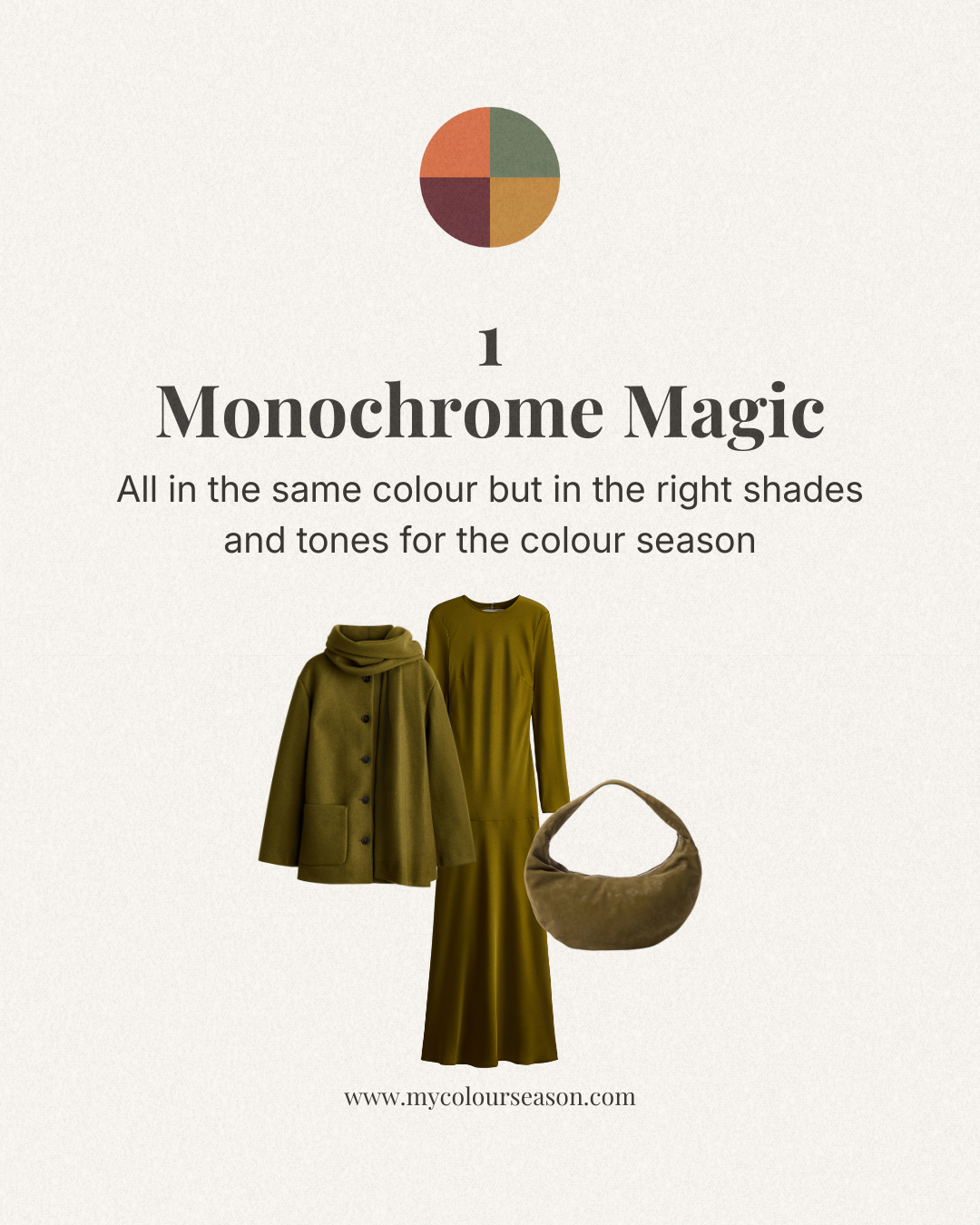
Monochromatic Outfits: Elegant Simplicity
Monochromatic outfits use different shades of the same colour to create a sleek, cohesive look:
Example: Soft pink blouse + dusty rose skirt + muted pink scarf (Summer palette)
Keeps outfits elegant while showcasing your seasonal colours
Adds visual interest with textures and layers rather than introducing multiple colours
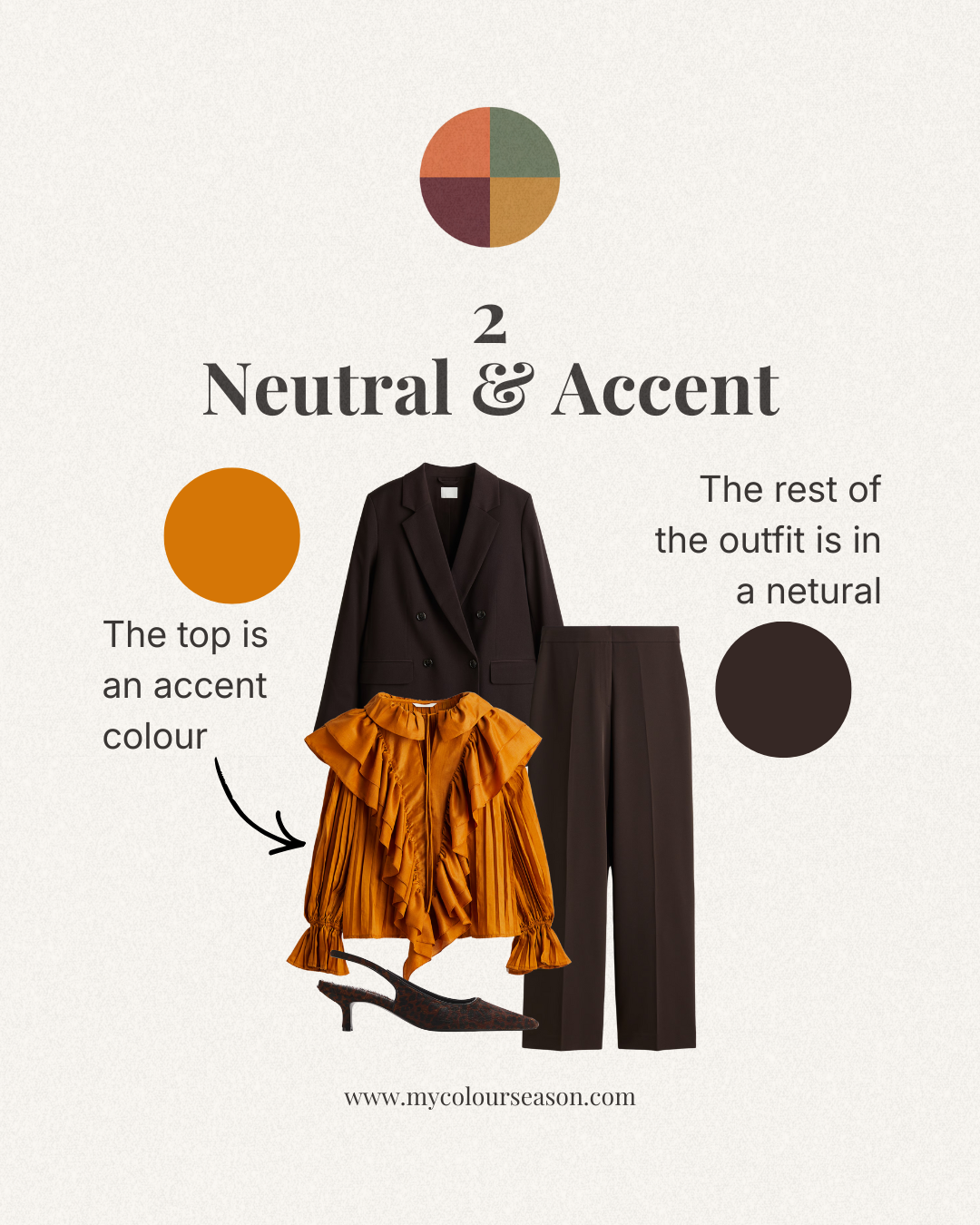
Neutrals with an Accent Colour: Subtle Pop
Using neutral colours as a base and adding one accent colour draws attention and keeps outfits balanced:
Example: Brown trousers + ivory top + coral scarf (Spring palette)
Neutral base prevents clashing, while accent colour highlights your seasonal palette
Works particularly well for professional or minimalist outfits
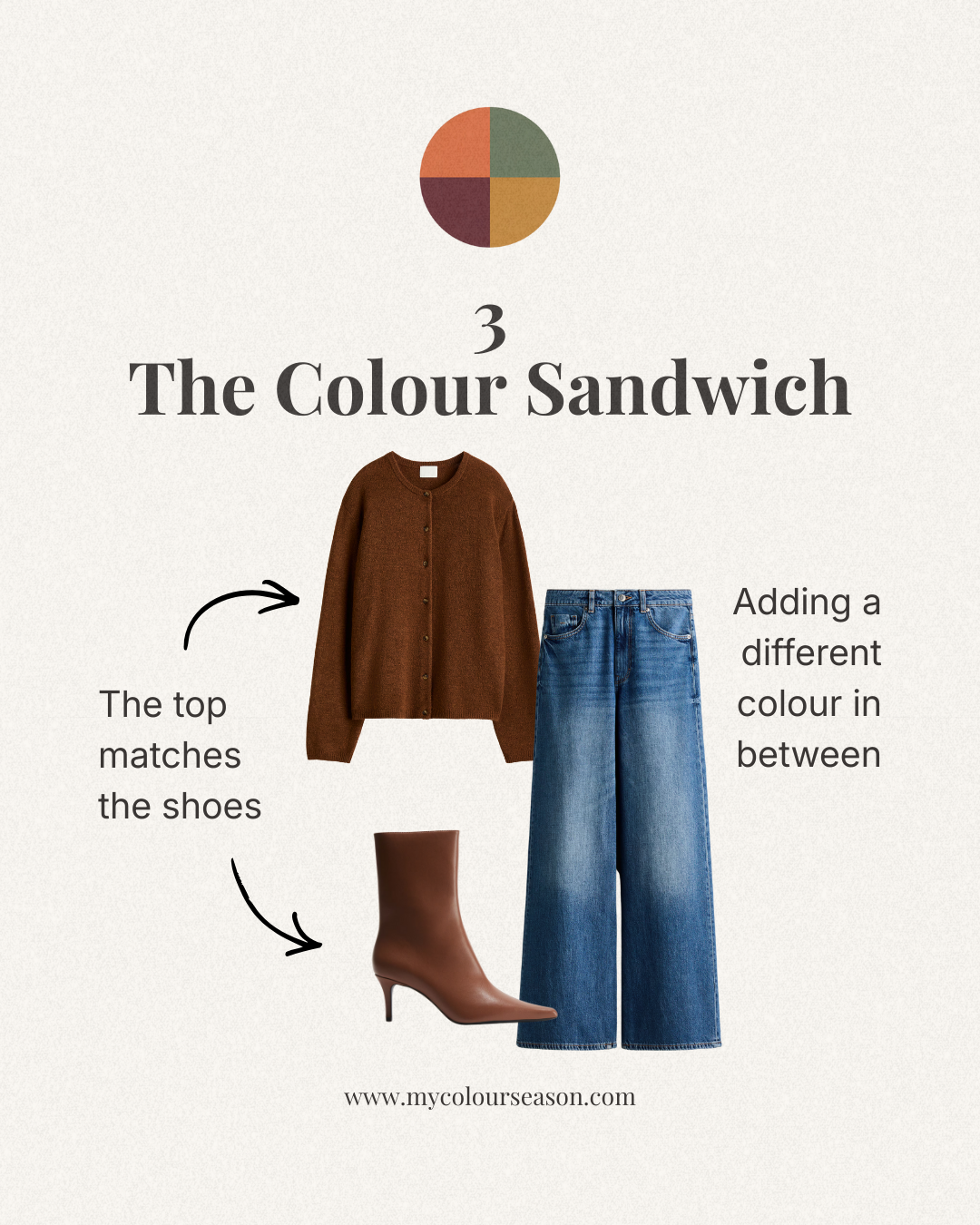
Colour Sandwiching: Balanced Layers
Colour sandwiching is layering a neutral or base colour between two pieces of the same accent colour.
Example: Light blue top + navy blazer + light blue scarf
Technique: Place a neutral or contrasting layer in between repeated colours to create balance and harmony
Works for all seasonal palettes, emphasising key colours without overwhelming your outfit
Additional Colour Mixing Techniques
Complementary Colour Pairing
Use colours opposite each other on the colour wheel to create vibrant contrast
Example: Autumn olive green + burnt orange
Analogous Colour Pairing
Use colours next to each other on the colour wheel for harmony
Example: Spring soft yellow + peach + warm coral
Layering Light and Dark Shades
Layer light and dark shades of your seasonal colours to add depth and dimension
Example: Winter royal blue coat + navy scarf + icy blue shirt
How to Apply Your Seasonal Palette via Email Colour Analysis
After receiving your personalised colour analysis report from MyColourSeason:
Review your seasonal palette carefully
Use techniques like colour sandwiching, monochromatic outfits, neutrals with accent colours, or complementary/analogous pairings
Apply these strategies to clothing, scarves, and accessories
Experiment and adapt the combinations that make you feel confident
With your seasonal palette and these techniques, mixing and matching colours becomes effortless and stylish.